
What is Horton Plains, and is it worth it?
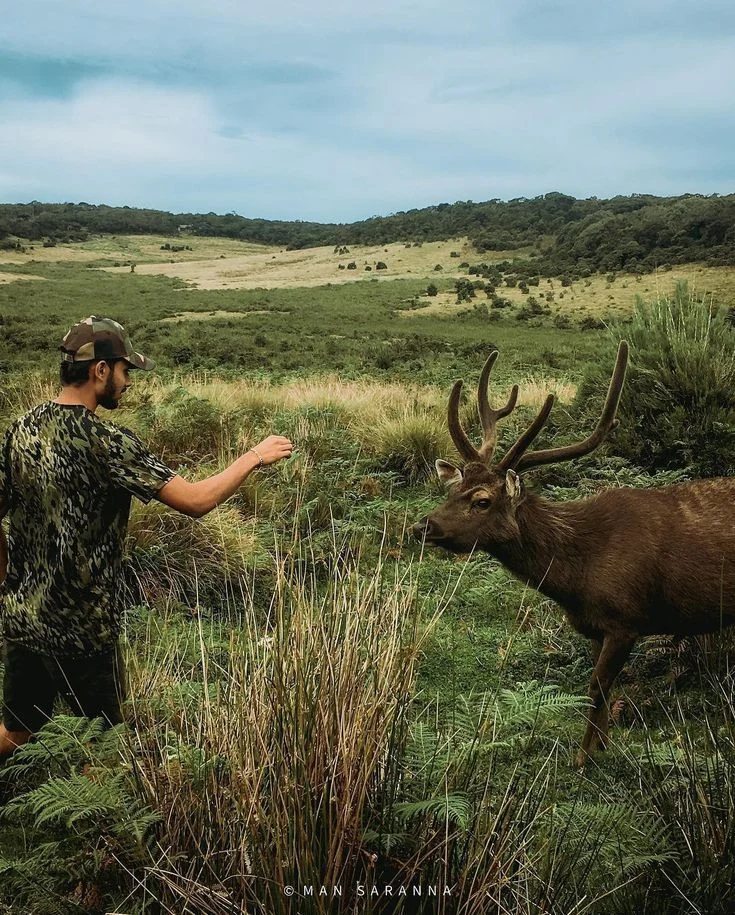
Horton Plains is Sri Lanka’s highest plateau, at a little over 2,000 m, and part of the Central Highlands World Heritage Site. It is a landscape of open grassland, stunted cloud forest and streams, home to sambar deer, purple-faced langurs and endemic birds.
The draw is World’s End, where the plateau stops at a cliff hundreds of metres high with the lowlands spread below. It is worth it if you can arrive early, because by late morning cloud often fills the view.
How do I get to Horton Plains?
Most people come from Nuwara Eliya, about 1–1.5 hours by road via Pattipola, leaving well before dawn. Hire a car or tuk-tuk for the return trip and agree the waiting time and price first.
By train, get off at Ohiya or Pattipola on the Kandy to Ella line; from either it is a long uphill road to the entrance, so most people take a tuk-tuk. From Ella or Haputale, allow about 2–2.5 hours by road.
What can I see at Horton Plains?
Walking is the main activity, and you must stay on the marked trails. The loop strings the highlights together.
- World’s End, with the view off the edge of the plateau.
- Little World’s End, a smaller drop with its own view.
- Baker’s Falls, named after the explorer Samuel Baker.
- Sambar deer in the grassland and purple-faced langurs in the forest.
- Endemic birds along the forest edges.
- The Srilor audio story, to play when you arrive.
When is the best time to visit Horton Plains?
January to March is the best time, with the clearest mornings, and in any month you should arrive early for clear views. Mist usually rises from the valleys by mid to late morning and can hide World’s End completely.
Dawn is cold, and frost is possible on clear nights early in the year, so bring a warm layer. From about May to September the south-west monsoon brings wind, rain and more cloud to these hills.
How much does Horton Plains cost?
Entry is by paid permit, with foreign visitor, service and vehicle charges that add up. The official tariff changes, so check before you go and ask for the total before you pay.
- Expect a bag check at the gate; plastic bags and wrappers are not allowed on the trails.
- Bring water, snacks in reusable boxes and a rain jacket.
- Wear walking shoes; the trail is rocky and muddy in places.
- Save a map offline, as signal is patchy on the plateau.
How long is the World’s End walk?
The loop is about 9 km and takes most people 3–4 hours at an easy pace. It is mostly level, with rocky and muddy stretches, and takes in Little World’s End, World’s End and Baker’s Falls.
Most walkers head for World’s End first, before the mist arrives. Stay behind the barriers at the cliff edge, and keep to the trail; the grassland is fragile.
Horton Plains National Park: quick answers
How long does the Horton Plains walk take?
Most people take 3–4 hours for the loop of about 9 km. Allow half a day to a full day including travel.
What time should I arrive at Horton Plains?
As early as the park allows. Mornings are clearest, and mist often hides World’s End by late morning.
Is the Horton Plains walk hard?
No, it is an easy walk for most people, mostly level on a rocky path. The cold, the altitude and the early start are the harder parts.
Can you see leopards at Horton Plains?
Leopards live on the plateau, but sightings are rare. Sambar deer and purple-faced langurs are far more likely.