
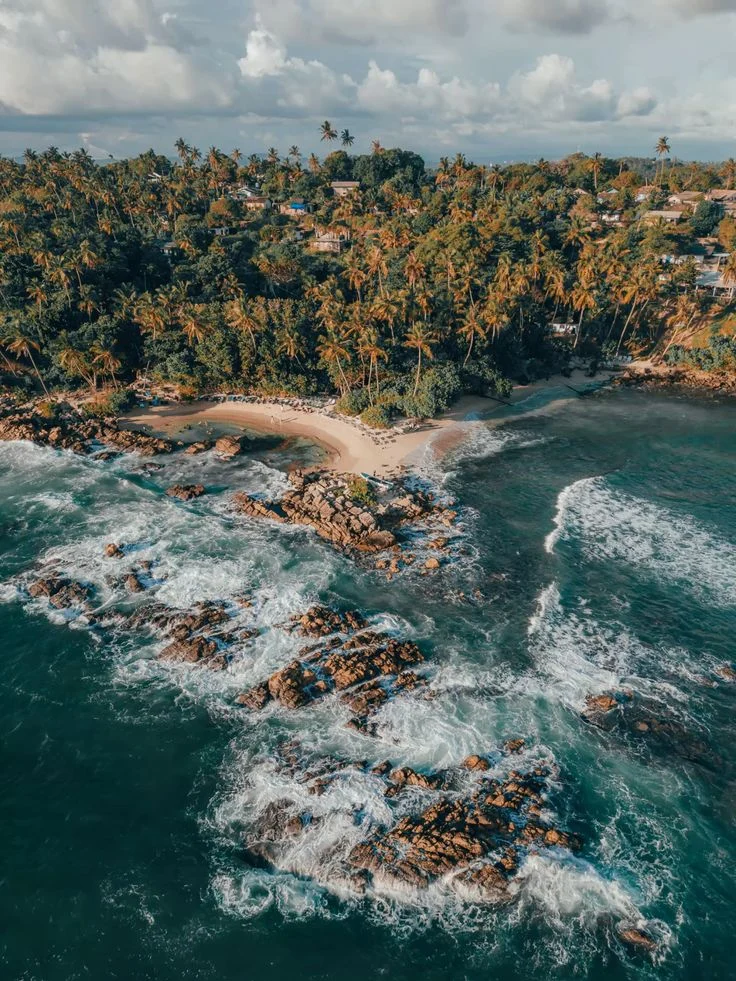
Is Mirissa worth visiting?
Yes, if you want a beach town with something to do beyond the beach. Mirissa has a sheltered main bay for swimming in season, a lookout on Coconut Tree Hill, and a fishing harbour where whale-watching boats leave at dawn.
It is busier and more built-up than it once was, and the beach strip can be loud at night in peak season. For quieter stays, look at the lanes back from the main road.
How do I get to Mirissa?
Mirissa sits on the coast road between Galle and Matara, about 45 minutes to an hour from Galle. Buses running between Galle and Matara stop in town; pay the conductor on board.
The coastal railway from Colombo Fort runs through Galle towards Matara. Get off at Weligama, a short tuk-tuk ride away, and sit on the right from Colombo for the sea. By car, the Southern Expressway gets you here from Colombo in roughly 2.5–3.5 hours.
What can I do in Mirissa?
Mirissa is small, so most things are a walk or a short tuk-tuk ride away. Mornings belong to the sea, evenings to the beach.
- Go whale watching from Mirissa harbour in season.
- Climb Coconut Tree Hill at sunrise or sunset.
- Wade out to Parrot Rock at low tide for the view back along the bay.
- Find Secret Beach, a small cove over the headland.
- Learn to surf at Weligama next door, where the waves are gentler for beginners.
- Eat fresh seafood on the beach, agreeing the price before it is cooked.
When is the best time to visit Mirissa?
December to April is the best time, with calm sea and dry days. Peak season starts in December, so book beds ahead, and whales are seen off Mirissa until about April.
From May to September the south-west monsoon brings rough sea and afternoon rain; swim only where the flag is green, and expect fewer boat trips. Showers thin out from late September, and beaches reopen through November.
How much does Mirissa cost, and what should I know?
There is no fee to visit Mirissa or its beaches. You pay for whale watching, surf lessons and boat trips, so compare a few operators and agree the full price before you book.
- Ask where it is safe to swim; currents are stronger at the ends of the bay.
- Cover up when you leave the beach; swimwear is for the sand.
- Carry rupees in small notes for tuk-tuks and food.
- Walk the main road with care, as buses pass fast.
How do I choose a whale-watching trip in Mirissa?
Boats leave the harbour early and usually take most of the morning, sometimes longer, depending on where the whales are. Blue whales are the main hope, with sperm whales and spinner dolphins also seen; sightings are never guaranteed.
Pick an operator that keeps its distance and does not chase or crowd the animals. Take seasickness tablets the night before if you need them, eat a light breakfast, and bring a hat and a layer for the ride out.
Mirissa: quick answers
When is whale-watching season in Mirissa?
Roughly November to April, with the calmest sea from December. Boats run far less during the south-west monsoon from May.
Can you swim in Mirissa?
Yes, from about December to April the main bay is usually calm. From May to September the sea is rough, so swim only where the flag is green.
How many days do you need in Mirissa?
1–3 days is enough for a whale trip, a sunrise at Coconut Tree Hill and some beach time. Stay longer if you want to learn to surf at Weligama.
Do you need to book whale watching in Mirissa?
In peak season it helps to book a day ahead through your guesthouse or an operator you have checked. Confirm the pick-up time and what is included before you pay.