
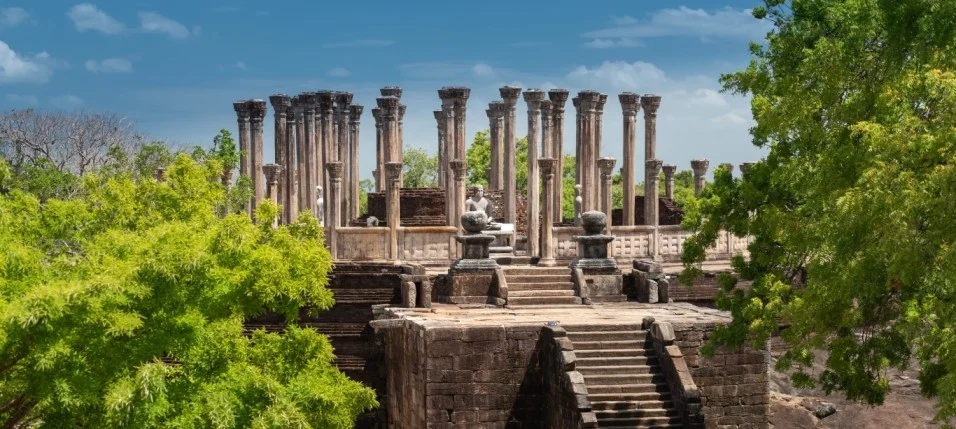
What is the Ancient City of Polonnaruwa?
After Anuradhapura fell, Polonnaruwa became the island’s capital, and it reached its height under King Parakramabahu I in the 12th century. He built palaces, monasteries and the huge Parakrama Samudra reservoir, which still waters the farmland around the town.
The ruins stretch for several kilometres through parkland, from the royal palace in the south to Gal Vihara and the big stupas in the north. The buildings sit closer together than at Anuradhapura, which makes the city easier to read.
How do I get to Polonnaruwa?
Polonnaruwa is about 1–1.5 hours by road from Sigiriya or Habarana, and buses run from Habarana and Dambulla through the day. Many people visit as a day trip from Sigiriya, adding a safari at Minneriya on the way.
The town is on the railway from Colombo towards Batticaloa; the station is a few kilometres from the ruins, so take a tuk-tuk from there. From Kandy, allow about 3–3.5 hours by road.
What can I see in Polonnaruwa?
Start at the archaeological museum, then work north through the site. The main group fills a morning.
- The Royal Palace of Parakramabahu and the Council Chamber with its carved elephants.
- The Quadrangle, the sacred heart of the city, with the circular Vatadage and its moonstones.
- Rankoth Vehera, the largest stupa in the city.
- Lankatilaka, an image house with a tall, headless standing Buddha.
- Gal Vihara: seated, standing and reclining Buddhas cut from a single granite face.
- Parakrama Samudra at sunset.
When is the best time to visit Polonnaruwa?
January to September is the best window, and early mornings are the coolest. The cultural triangle is hot and mostly dry all year, so heat is a bigger issue than rain.
From about October to December, showers and then the north-east monsoon bring heavier rain. In any month, start when the site opens and take a long lunch break in the hottest hours.
How much does Polonnaruwa cost?
The foreign adult ticket is USD 30; check the current price before you go. Tickets are sold at the archaeological museum, so start there and keep your ticket with you, as it is checked at the main monuments.
- Shoes and hats come off at shrines; socks help on hot stone.
- Cover shoulders and knees at the Quadrangle and Gal Vihara.
- Never pose with your back to a Buddha image.
- Carry water, as shade is patchy between monuments.
- Play the Srilor audio story when you arrive; the first chapter is free.
Can you cycle around Polonnaruwa?
Yes, and it is the best way to see it. The site is flat, the inner roads are mostly quiet, and a bicycle lets you move between monuments spread over several kilometres at your own pace.
Guesthouses and shops in town hire out bicycles; check the brakes before you set off. Start early, carry water, and allow most of a day if you want to see the whole site without rushing.
Ancient City of Polonnaruwa: quick answers
How long do you need in Polonnaruwa?
Allow 3–7 hours. A half-day by bicycle covers the main monuments, and a full day lets you add the museum and the reservoir at sunset.
How much is the Polonnaruwa entrance fee?
The foreign adult ticket is USD 30. Fees change, so check before you go.
Is Polonnaruwa or Anuradhapura better?
Polonnaruwa is smaller, closer to Sigiriya and easier to see in a day. Anuradhapura is older and more spread out, with great stupas still in active worship.
Can I visit Polonnaruwa from Sigiriya in a day?
Yes. It is about 1–1.5 hours by road each way, so leave early and add Minneriya for an afternoon safari.