
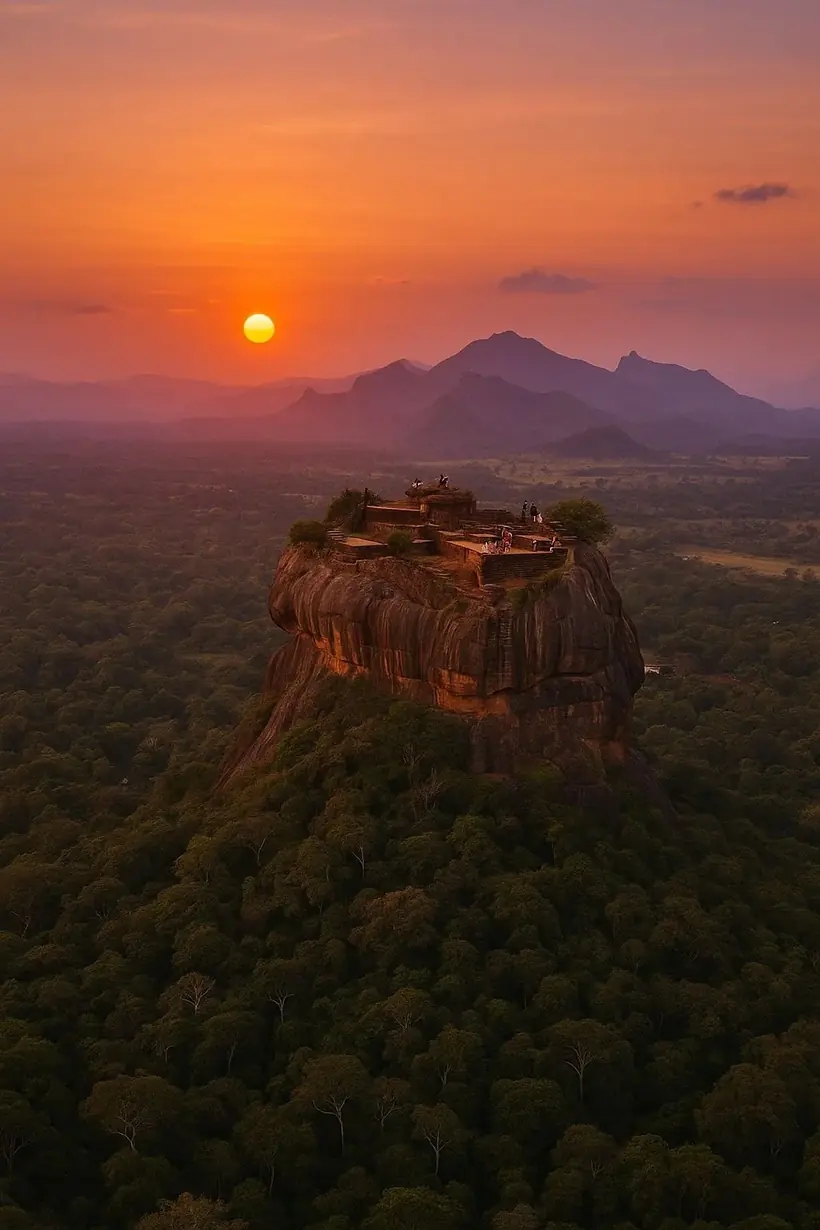
What is Sigiriya, and is it worth visiting?
Sigiriya, the Lion Rock, was a royal citadel in the 5th century under King Kashyapa. He built a palace on the summit and laid out gardens, pools and moats at its foot, and much of that plan still shows on the ground. It is the best-known sight in the cultural triangle, and worth it if you can manage steep steps and some height.
How do I get to Sigiriya?
Most people stay in Sigiriya village, a short walk or tuk-tuk ride from the ticket office. Dambulla, about 20 km away, is the nearest bus hub, with buses to Sigiriya through the day; a tuk-tuk takes around 30–40 minutes.
The nearest railway station is Habarana, about 30 minutes away by road. From Kandy, take a bus to Dambulla (about 2–2.5 hours) and change; by car from Colombo, allow about 4 hours.
What is there to do at Sigiriya?
Give yourself time at the bottom as well as the top. The gardens are part of the design, not a waiting area.
- Walk the symmetrical water gardens on the main path to the rock.
- Pass through the boulder gardens, with older monastic cave shelters among the rocks.
- Climb the spiral staircase to the painted women in the fresco pocket.
- Read the centuries-old visitors’ verses scratched into the polished Mirror Wall.
- Stand between the giant lion paws at the Lion Gate before the final stairs.
- Explore the summit: palace foundations, a rock-cut pool and views to Pidurangala.
When is the best time to visit Sigiriya?
January to April is the best window, with the driest, clearest days. The cultural triangle is hot and mostly dry all year, so you can visit in any month; plan around the heat rather than the rain.
Time of day matters more than the month. Be at the gate when it opens to climb before the heat and the tour groups, or go in the late afternoon for softer light. October and November can bring afternoon showers, which make the steps slippery.
How much does Sigiriya cost, and what should I know before I go?
The foreign adult ticket is USD 35; check the current price before you go. Carry rupees in small notes for the tuk-tuk, water and snacks.
- Wear shoes with grip; the upper stairs are metal and the rock can be slick.
- Bring water and a hat. There is no shade on the summit.
- Keep quiet near the hornet warning signs; on rare days the upper rock closes because of hornets.
- Agree tuk-tuk fares before you set off; around LKR 100 to 120 a kilometre is fair.
How hard is the Sigiriya climb?
It is a steady climb of about 1,200 steps, mostly stone stairs, with steep metal staircases near the top. Most reasonably fit people reach the summit in about 45 minutes to an hour with stops, and the way down is quicker.
The exposed stairs above the Lion Gate are the part that worries people with a fear of heights. They have railings and you can go at your own pace. If you would rather not, the gardens, the frescoes and the Lion Gate still make a good visit.
Sigiriya: quick answers
How long does it take to climb Sigiriya?
Most people reach the top in about 45 minutes to an hour, with stops. Allow 1–3 hours for the whole visit, including the gardens.
How much is the Sigiriya entrance fee?
The foreign adult ticket is USD 35. Fees change from time to time, so check before you go.
Is Sigiriya or Pidurangala better?
Sigiriya has the frescoes, gardens and palace ruins; Pidurangala, next door, is a rougher scramble with a view of Sigiriya itself. Many people climb Pidurangala for sunrise and Sigiriya straight after.