
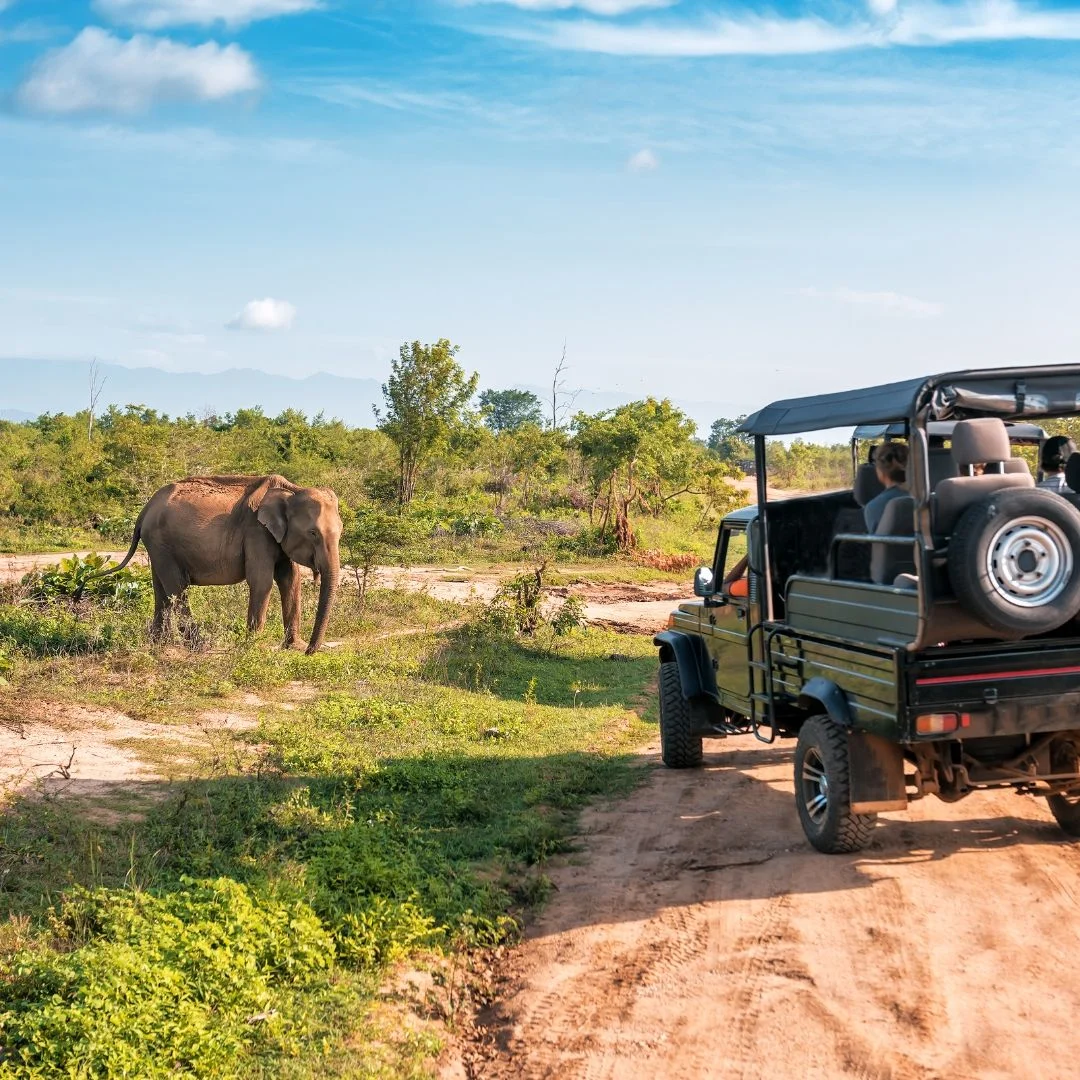
Is Yala National Park worth visiting?
Yes, if you want your best chance of seeing a leopard in Sri Lanka. Yala is a dry-zone landscape of thorn scrub, waterholes, lagoons and granite rocks running down to the sea.
Leopards are the headline, but elephants, spotted deer, water buffalo, crocodiles, peacocks and painted storks are commonly seen. Sloth bears are rarer and a real prize.
How do I get to Yala National Park?
Tissamaharama, usually shortened to Tissa, is the main base, with Kirinda close by on the coast. Safari jeeps collect you from your guesthouse before dawn and drive to the main Palatupana gate in about 30–45 minutes.
There is no railway to Yala. Buses run to Tissa along the south coast via Hambantota, and the drive from Colombo takes about 4–5 hours on the Southern Expressway. From Ella it is about 2.5–3 hours by road via Wellawaya.
What can I do at Yala?
The jeep safari is the main event. Book through your guesthouse or a licensed operator.
- Take a morning safari, queuing at the gate before it opens, for the best leopard chances.
- Add an afternoon drive, or do a full day with a packed lunch.
- Watch elephants and buffalo at the waterholes in the dry months.
- Look for painted storks, bee-eaters and eagles at the lagoons.
- Visit the pilgrim town of Kataragama, about 30 minutes from Tissa.
- Walk beside Tissa Wewa, the old reservoir in Tissamaharama, at dusk.
When is the best time to visit Yala?
February to July is the best window: the park is dry, the bush thins and animals gather near water. Part of the park usually closes for some weeks in the late dry season, so check annual block closures before you travel.
From about November to January the north-east monsoon brings rain to this corner of the island and tracks can be muddy. The park turns green, though, and migrant birds arrive.
How much does a Yala safari cost?
Entry is by paid permit, and the total adds up from several parts: park entry for foreign visitors, service charges and taxes, plus the jeep and driver. The official tariff changes, so check before you go and ask for a written total that covers everything.
- Share a jeep with other travellers to split the fixed vehicle cost.
- Bring a hat, water, sun cream and binoculars.
- Pack a layer; an open jeep is cool at dawn.
- Stay in the vehicle except at the designated stops.
Which part of Yala should I visit?
Yala is divided into blocks, and most safaris use Block 1, entered at Palatupana, which has the most leopard sightings and the most jeeps. The Katagamuwa gate near Kataragama leads into the same area by a quieter route.
Other blocks are wilder and less crowded but see fewer leopards. Wherever you go, ask your driver not to chase or crowd animals; at a sighting, a calm driver who waits usually gets the better view.
Yala National Park: quick answers
Are you guaranteed to see a leopard in Yala?
No. Yala gives you some of the best leopard odds anywhere, but sightings are never guaranteed. A morning safari and a patient driver give you the best chance.
Is a half-day or full-day safari better at Yala?
A half-day morning safari suits most people. A full day gives more time at waterholes and better odds for leopards and bears, but it is long and hot.
When is Yala closed?
Part of the park usually closes for a few weeks each year in the late dry season. Dates vary, so check the annual block closures before you book.
Where should I stay for Yala?
Tissamaharama and Kirinda are the main bases, with guesthouses that arrange early jeeps. Some camps and hotels sit closer to the park gate.