Updated 15 November 2026. Ticket rules change; we give the source and the year for every figure.
What is Sigiriya?
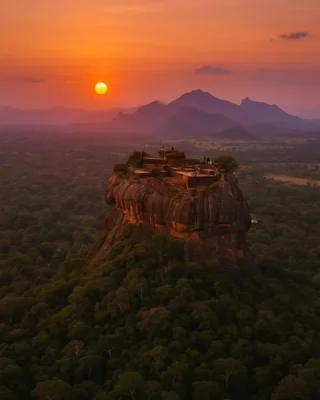
Sigiriya is a huge rock that rises about 180–200 m out of the forest in central Sri Lanka, with the ruins of a palace on top. In the 5th century, King Kashyapa built his capital here: gardens and pools at the foot, painted walls on the cliff, and a gate shaped like a crouching lion halfway up. After his death it became a monastery, then was slowly lost to the jungle. Since 1982 it has been a UNESCO World Heritage Site.
How much is the Sigiriya ticket?
The Central Cultural Fund, which runs the site, listed the ticket for foreign adults at US$35 in 2026, paid in rupees at the day’s rate. Children pay less, and Sri Lankans pay a local rate. Prices change, so check at the ticket office or on the Central Cultural Fund’s own site before you go.
- Where to buy: at the ticket counter by the entrance, or online on the Central Cultural Fund’s e-services site (eservices.ccf.gov.lk). Beware of look-alike sites that add a fee.
- Bring your passport, or a copy. Foreign and local prices differ, and staff may ask.
- The museum: the ticket has usually included the Sigiriya Museum near the entrance. Ask at the counter.
- Keep your ticket: it is checked more than once on the way up.
When should I go?
The best hour is opening time. In the first hour, the steps are quieter and the rock is still cool. By late morning, the sun beats on the western face, tour groups arrive, and the narrow stairs near the top can turn into a slow queue. The other good time is later in the afternoon, when the heat eases, but leave enough time to get up before last entry. Opening and last-entry times differ between sources, so ask at your guesthouse or the ticket office the day before.
The best months are January to April, when the Cultural Triangle is mostly dry. Sigiriya is open all year. Later in the year, rain is more likely, so climb in the morning. Weekends, school holidays and Poya (full moon) days are busier.
How long does the climb take, and how hard is it?
Allow 2–3 hours for the gardens, the climb and the summit, and more if you visit the museum or the queue is long. The climb itself is about 1,200 steps: stone stairs, metal stairways bolted to the rock, and a narrow spiral stair up to the frescoes. Anyone of normal fitness can do it slowly. Bring water, wear shoes with grip, and take breaks in the shade.
If you don’t like heights, the metal stairs on the cliff face are the hard part. They have handrails, and you can stop at the Lion’s Paw terrace if the last stretch is too much. Wild hornets nest on the rock. Keep your voice down near the nests, and if staff ask you to wait or come down, do so.
What will I see on the way up?
- The water gardens. Pools, channels and fountains laid out in straight lines towards the rock. They were laid out as part of the royal city,.
- The boulder gardens. Paths wind between huge rocks, with cut steps and the bases of old buildings and shrines from the monastery years.
- The frescoes. Up a spiral stair, in a hollow of the cliff, are the painted women of Sigiriya: graceful figures holding flowers, still bright after some 1,500 years. Who they were is still argued over. Follow the signs about photos.
- The mirror wall. A long wall, said to have been polished so smooth the king could see himself in it. For centuries, visitors scratched short poems onto it about the women in the paintings. Don’t touch it.
- The Lion’s Paw. A wide terrace where two enormous stone paws mark the old lion gate. The rest of the lion is gone. From here, the last stairs climb the open rock face.
- The summit. The foundations of the palace, a large tank cut into the rock, and views over the forest to Pidurangala and the hills.
The story of Kashyapa is one of the island’s great tales: a son who seized the throne, a brother who fled to India and came back with an army, and a king who built a city in the sky. In SriLor, our free app, you can hear it as The Rock Above the Forest, in five chapters. The first chapter is free.
Is the Sigiriya Museum worth it?
Yes, and go first. The museum near the entrance shows models of the rock city as it was, copies of the frescoes and finds from the site. Twenty minutes there makes the climb make sense.
Sigiriya or Pidurangala?
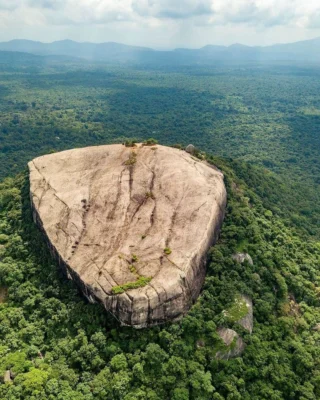
Climb Sigiriya for the history: the gardens, the frescoes and the palace. Climb Pidurangala, the rock next door, for the view of Sigiriya itself, above all at sunrise. Pidurangala is a temple, so cover your shoulders and knees, and the last part is a scramble over boulders. With a day, do both: Pidurangala at dawn, Sigiriya straight after. Our Sigiriya vs Pidurangala guide compares them side by side.
How do I get to Sigiriya, and where should I stay?
By road. From Colombo airport, Sigiriya is about 4 hours by car. Dambulla is about 30 minutes away, and Kandy about 2–2.5 hours. Buses run to Dambulla, and local buses and tuk-tuks go on to Sigiriya. Stay in Sigiriya village, within a tuk-tuk ride of both rocks, so you can be at the gate at opening time. Two nights let you see Sigiriya, Pidurangala and Dambulla without rushing.
What else is near Sigiriya?
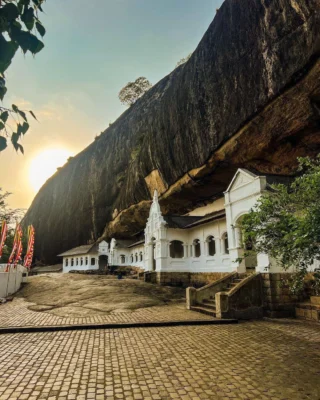
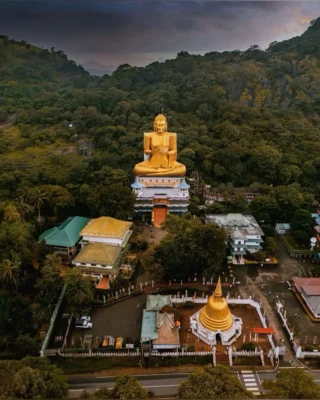
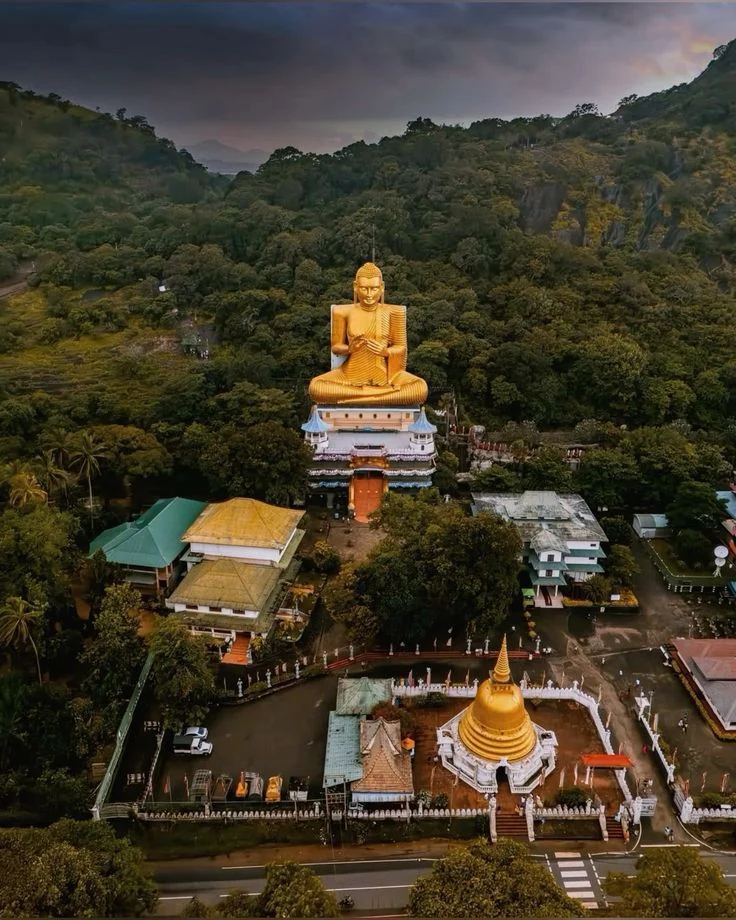
- Dambulla Cave Temple: five painted caves full of Buddha statues. Go as it opens.
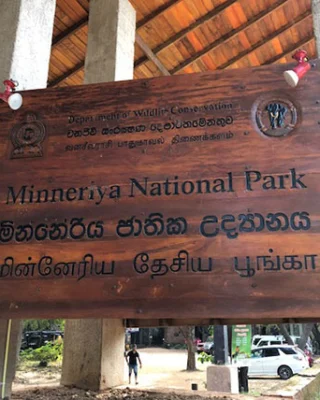
- Minneriya and Kaudulla: afternoon jeep safaris for elephants. Our safari guide explains which park when.
- Polonnaruwa: a medieval royal city, best by bicycle.
- Jathika Namal Uyana: a forest of ironwood trees and a rose-quartz ridge.
- Popham’s Arboretum near Dambulla: a quiet dry-zone forest for an early walk.
Our 4-day Cultural Triangle route puts these in order, and the 7-day itinerary starts here. For dress at temples, see temples and dress.
Questions people ask
How much does it cost to climb Sigiriya?
The Central Cultural Fund listed the foreign adult ticket at US$35 in 2026, paid in rupees. Children pay less. Check the current price at the ticket office or on the Central Cultural Fund site.
How many steps are there at Sigiriya?
About 1,200, including metal stairways on the cliff face and a spiral stair to the frescoes.
How long does it take to climb Sigiriya?
Allow 2–3 hours for the gardens, the climb and the summit. Add time for the museum and for queues in the middle of the day.
What is the best time to visit Sigiriya?
At opening time, any month. January to April is the driest season in the Cultural Triangle.
Can I fly a drone at Sigiriya?
Not without permission. Filming with a drone needs written approval from the Central Cultural Fund in advance, and the noise can disturb the hornets.
Is Sigiriya hard to climb?
It is steady work but not technical. Take it slowly and carry water. The exposed metal stairs near the top are the hardest part for people who don’t like heights.
Sources
- Central Cultural Fund: visitor ticket prices (ccf.gov.lk), seen November 2026
- UNESCO World Heritage Centre: Ancient City of Sigiriya (inscribed 1982)
- SriLor app: Sigiriya place information and the story The Rock Above the Forest